
Big Four Bet on AI Agents: The 4 AI Agents of 2025
Agent Building | Jan 14, 2026 | Patricia Angeline



The professional services landscape stands at a turning point. The Big Four accounting firms are investing heavily in agentic AI platforms, fundamentally reshaping how enterprise operations function. Deloitte, PwC, KPMG, and EY have each launched sophisticated AI agent platforms that promise to transform everything from audit processes to procurement management.
These Big 4 AI agents represent more than incremental technological upgrades. They signal a decisive shift toward autonomous enterprise operations where artificial intelligence handles complex workflows that once required armies of junior professionals. For organizations of all sizes, understanding how the four bet on AI agents matters now more than ever in 2025.
Big 4 AI Agents Reshaping Enterprise Professional Services
Deloitte's Agentic AI Platform for Autonomous Enterprise
Deloitte launched Zora AI in March 2025, creating intelligent digital workers that can perceive, reason, and act to complete tasks autonomously. The platform tackles financial operations first, focusing on expense management, invoice processing, and working capital optimization.
Zora AI demonstrates Deloitte's commitment to AI through automated procurement processes that previously consumed thousands of employee hours. The AI agent reviews contracts using natural language processing to identify risk clauses and compliance gaps. It consolidates procurement data to surface cost savings and predicts supplier delays before they disrupt operations.
Key capabilities include:
Automated audit workflows that scan financial records for anomalies
Procurement automation that evaluates vendor contracts at scale
Real-time financial analysis and trend forecasting
Integration with existing enterprise systems for seamless workflow
The platform aims to liberate thousands of hours annually while cutting costs by approximately 25%. Deloitte designed the system to expand beyond finance into sales, marketing, and customer service functions across global operations.
PwC AI Agent Solutions for Automation
PwC has developed modular AI agent capabilities focused on tax compliance, advisory automation, and software development acceleration. The firm integrates AI agents into core services using natural language processing and predictive analytics to maintain competitive advantage.
The platform takes a governance-first approach, operating more like an AI operating system than traditional chatbots. This framework allows enterprise clients to deploy multiple agents across departments while maintaining centralized oversight and control.
PwC's AI agent handles routine compliance checks and tailors guidance for auditors working on complex engagements. The system speeds up software development workflows and provides customized recommendations based on client-specific regulatory requirements. For small businesses, this democratizes access to sophisticated tax and advisory capabilities previously available only to large corporations.
KPMG's AI Platform for Audit and Procurement
KPMG launched Workbench in June 2025, a multi-agent collaboration environment that mirrors human audit teams. The platform emphasizes orchestration, with multiple agents handing tasks to one another like human colleagues.
Built-in transparency mechanisms document every decision, maintaining the accountability standards essential for audit work. The system integrates directly with client portals for file exchange, reducing friction in document-heavy processes.
KPMG's approach reflects their audit heritage. David Rowlands, KPMG's global head of AI, describes weaving AI agents into service delivery as innovative digital teammates working closely with audit, tax, and advisory professionals. The AI agent workforce operates continuously, crossing organizational silos and geographic borders without the limitations of human teams.
The platform scans millions of accounting entries to flag anomalies for human review. In due diligence scenarios, AI agent models read and summarize thousands of contracts within minutes, surfacing risks that manual review might miss
EY.ai Agentic Platform for Autonomous Operations
KPMG launched Workbench in June 2025, a multi-agent collaboration environment that mirrors human audit teams. The platform emphasizes orchestration, with multiple agents handing tasks to one another like human colleagues.
Built-in transparency mechanisms document every decision, maintaining the accountability standards essential for audit work. The system integrates directly with client portals for file exchange, reducing friction in document-heavy processes.
KPMG's approach reflects their audit heritage. David Rowlands, KPMG's global head of AI, describes weaving AI agents into service delivery as innovative digital teammates working closely with audit, tax, and advisory professionals. The AI agent workforce operates continuously, crossing organizational silos and geographic borders without the limitations of human teams.
The platform scans millions of accounting entries to flag anomalies for human review. In due diligence scenarios, AI agent models read and summarize thousands of contracts within minutes, surfacing risks that manual review might miss
How the Four Bet on AI Agents Transforms Business Models
From Manual to Autonomous Enterprise with AI Automation
The shift from labor-intensive workflows to AI-driven automation fundamentally alters professional services economics. Traditional models relied on billable hours and large teams of entry-level professionals performing repetitive tasks. Agentic AI collapses this structure.
Big Four firms collectively invested over $4 billion in artificial intelligence initiatives, with individual commitments that rival Silicon Valley startup funding rounds. Deloitte committed $3 billion to building AI solutions and partnerships with tech giants like Google and Nvidia.
This represents more than technology investment. It signals recognition that AI automation enables new service delivery models where enterprises purchase outcomes rather than hours. The transition challenges century-old business models but unlocks unprecedented scalability for both enterprise and small businesses.
Key Areas of Agentic AI Automation in Professional Services
AI agents excel in several critical domains:
Audit processes: Automated testing of financial controls, transaction verification, and anomaly detection that once required weeks of manual review now complete in hours. AI agents scan entire data sets rather than samples, improving coverage and accuracy.
Procurement management: Contract analysis, vendor evaluation, spend analytics, and predictive forecasting transform supply chain operations. AI agents identify cost savings and risks that human analysts struggle to spot in massive data sets.
Financial reporting: Automated consolidation, variance analysis, and regulatory compliance reporting free finance teams from repetitive tasks. AI agents generate reports in real-time rather than monthly or quarterly cycles.
Advisory support: Research synthesis, regulatory change monitoring, and customized recommendations enable consultants to focus on strategic guidance rather than information gathering.
The automation extends across workflows that involve data analysis, pattern recognition, and rules-based decision-making. Tasks like document review, compliance checking, and routine correspondence shift to AI agents while humans handle judgment calls and relationship management.
The Autonomous AI Agent Advantage for Enterprise
Autonomous operation delivers several competitive advantages:
AI agents work continuously without breaks or shift changes. A 24/7 operational cadence means faster turnaround times for clients and the ability to serve more accounts without proportional headcount increases. EY staff can serve a larger roster of clients with help from agentic AI.
Consistency improves as AI agents apply the same standards and procedures to every task. Human variation in quality decreases, particularly for routine work where fatigue or attention drift affects outcomes. The technology maintains high accuracy across millions of transactions.
Cost reduction comes from automation replacing manual effort. While technology investments are substantial, the economics become favorable at scale. Organizations reduce costs while maintaining or improving service quality, creating margin for investment in higher-value activities.
Speed accelerates dramatically. Processes that took weeks compress to days or hours. This responsiveness becomes a differentiator as clients expect faster insights and real-time reporting rather than periodic updates.
Industry-Wide Business Models Transformation
The competition extends beyond the Big Four to AI-native startups building identical capabilities. Traditional firms face disruption from companies born in the cloud that never relied on billable hours.
The Big Four must transform internal operations while competing against nimble competitors unburdened by legacy systems and business models. This dual challenge forces innovation at unprecedented speed.
New service offerings emerge as AI capabilities enable solutions previously too expensive or time-consuming to deliver. Small businesses gain access to sophisticated analytics and advisory services once reserved for large enterprises. The market expands as automation makes services affordable at lower price points.
Skill requirements shift dramatically. Deloitte employees need to act as technologists and engineers first, consultants second. Professional services firms recruit for different capabilities, emphasizing technical skills alongside domain expertise.
Enterprise AI Agent Benefits: Big Four Bet on AI in 2025
Advantages for Large Enterprise Automation
Large enterprises benefit from AI agents that scale across complex organizational structures. The technology integrates with existing systems like customer relationship management platforms and enterprise resource planning software.
AI agents handle data analysis at volumes impossible for human teams. They process millions of transactions to identify patterns and opportunities that inform strategic decisions. The analytical capabilities augment human judgment rather than replacing it.
Operational cost reduction at scale creates significant margin improvement. Enterprises automate repetitive workflows across departments while maintaining quality standards. Decision-making improves as AI agents surface insights from data that would otherwise remain siloed.
Agentic AI Benefits for Small Businesses
Small businesses gain disproportionate advantages from Big 4 AI agents. Access to enterprise-grade capabilities levels competitive playing fields. Affordable automation solutions make sophisticated tax planning and compliance management accessible to companies without large professional services budgets.
Faster implementation and return on investment matter more for small businesses operating with tighter margins. Cloud-based AI platforms require minimal infrastructure investment and begin delivering value within weeks. The technology enables small businesses to compete for talent by automating mundane tasks, improving job satisfaction.
Professional Services Evolution with AI Agents
Human professionals shift toward higher-value work as AI agents handle routine tasks. Tax experts focus on complex planning strategies rather than form completion. Auditors concentrate on judgment calls rather than testing samples. Consultants spend more time on strategic recommendations.
Client service delivery improves through faster response times and comprehensive analysis. Real-time reporting replaces periodic updates. Accuracy increases in audit and compliance work where AI agents apply consistent standards across entire populations. Research indicates AI agents could boost productivity by 40% in finance teams.
AI Platform Infrastructure for Autonomous Enterprise
The EY.ai agentic platform exemplifies platform-based approaches where organizations deploy multiple agents coordinated through central infrastructure. This architecture enables agents to hand tasks between one another, creating workflows that mirror human team coordination.
OS-level integration strategies embed AI agents into core business systems rather than operating as standalone tools. Multi-agent coordination capabilities allow organizations to orchestrate complex processes involving multiple specialized AI agents.
Ecosystem development around AI platforms creates network effects. Third-party developers build specialized agents that integrate with Big Four platforms, expanding capabilities beyond what any single firm could develop internally.
See intelligent automation for customer communications and engagement
The Future of Agentic AI in Autonomous Enterprise Operations
Big 4 AI Agents Evolution Beyond 2025
The Big 4 AI agents will continue evolving rapidly beyond initial deployments. Deloitte, PwC, KPMG, and EY invest in expanding capabilities based on operational experience.
Expansion beyond traditional professional services appears certain. Financial services, healthcare, manufacturing, and other sectors adopt similar AI agent approaches. The Big Four leverage platform experience to serve clients across industries with customized agents.
Integration with emerging technologies like quantum computing and Internet of Things sensors will enhance AI agent capabilities. Industry-specific agent specialization creates opportunities for tailored solutions across healthcare, manufacturing, and retail sectors.
What the Four Bet on AI Agents Means for Business Models
Agentic AI technology supplements human employees, but digital agents take on work currently shouldered by thousands. Accessibility of AI agent technology increases as platforms mature and costs decline. Cloud delivery models make enterprise-grade capabilities available to mid-market and small businesses.
AI-ready infrastructure becomes essential for competitive operations. Organizations without the technical foundation to deploy AI agents fall behind competitors who leverage automation for speed and cost advantages. Early adoption creates compounding advantages through expertise development and process refinement.
Lessons from Big Four Bet on AI Platform Strategy
Strategic investment in AI platforms yields dividends that justify substantial upfront costs. The Big Four recognize that artificial intelligence represents infrastructure investment rather than optional enhancement.
Multi-domain approaches deliver better results than point solutions. AI agents that coordinate across functions create more value than isolated automation. Integration capabilities prove crucial for adoption. AI agents that work seamlessly with existing systems generate returns faster.
Human-AI collaboration models outperform pure automation approaches. The most effective implementations augment human capabilities rather than attempting to eliminate people. AI agents handle volume and routine work while humans focus on judgment and strategic thinking.
Get Started with AI Agents at KingCaller.ai
Implementing AI agents becomes more accessible with platforms designed for business users rather than requiring extensive technical expertise. Solutions that handle the underlying complexity while exposing intuitive configuration interfaces enable faster deployment and easier maintenance.
Modern AI agent platforms provide pre-built integrations with common business tools, reducing implementation time. They offer analytics dashboards that surface performance insights without requiring data science skills. Support resources help organizations optimize their deployment for specific use cases.
Conclusion
The Big 4 AI agents launched by Deloitte, PwC, KPMG, and EY in 2025 demonstrate how the four bet on AI agents drives transformation across professional services and enterprise automation. Agentic AI platforms move beyond experimental technology to become essential infrastructure for competitive operations.
The investment signals broader recognition that artificial intelligence fundamentally reshapes business models and service delivery approaches. 2025 marks an inflection point where autonomous enterprise operations transition from future vision to present reality. Organizations that embrace AI agent technology position themselves for sustained competitive advantage.
Common FAQs
Who are the Big 4 AI agents?
The Big 4 AI agents refer to platforms from Deloitte (Zora AI), EY (EY.ai Agentic Platform), KPMG (Workbench), and PwC. These platforms automate professional services across audit, tax, procurement, and advisory functions.
What is agentic AI and autonomous enterprise?
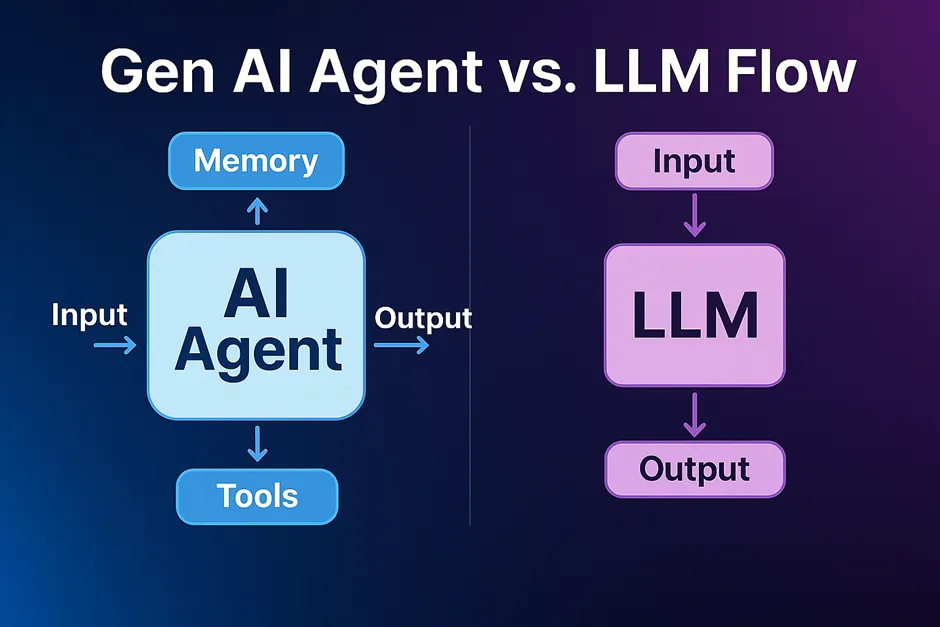
Agentic AI refers to intelligent systems that complete tasks and make decisions autonomously. Unlike AI chatbots that respond to questions, agentic AI takes action. Autonomous enterprise describes organizations where AI agents handle complex workflows independently across functions.
How do Big Four use AI agents in professional services and audit?
The Big Four deploy AI agents to scan financial records, analyze contracts, handle tax compliance, and synthesize research. The technology automates repetitive tasks while professionals focus on judgment and strategy.
Can small businesses benefit from enterprise AI agents?
Small businesses access sophisticated financial analysis and compliance management through cloud-based delivery at lower price points. Implementation happens faster with quicker returns compared to traditional consulting.
What makes the EY.ai agentic platform different from other AI platforms?
The EY.ai agentic platform serves 80,000 tax professionals with 150 specialized agents handling over three million compliance cases annually. The system focuses on domain-specific complexity rather than generic automation.
Related Blogs














Be The Change In
Customer Engagement