
What Are AI Agents? How It Works, and its Impact
Agent Building | Jan 13, 2026 | Patricia Angeline


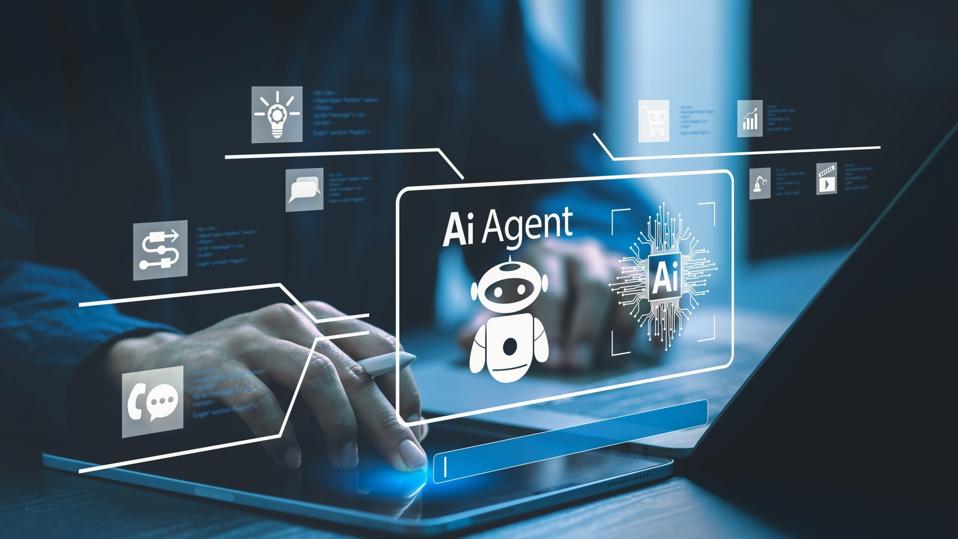
Imagine a potential customer calls your business at 1 AM with questions about your services. Instead of reaching voicemail, they connect with an intelligent system that understands their needs, answers their questions accurately, and even schedules a follow-up appointment. This is an AI agent at work.
An AI agent is a software program designed to perceive its environment, make decisions based on that information, and take actions to achieve specific goals without constant human intervention. Unlike traditional software that follows rigid instructions, AI agents can adapt their behavior based on what they observe and learn from interactions.
This technology is reshaping how businesses handle customer engagement, automate workflows, and scale their operations. Understanding how AI agents work, the different types available, and their practical applications can help organizations identify opportunities to improve efficiency and customer satisfaction.
Understanding AI Agents: Core Components and How They Work
AI agents are built on several interconnected systems that work together to create intelligent, responsive behavior. Each component of an AI agent plays a specific role in enabling autonomous function.
Components of an AI Agent
The architecture that agents are built upon includes four essential elements:
Perception Mechanisms: These systems collect information from the environment through various inputs. For voice-based AI agents, this includes speech recognition technology that converts spoken language into processable data. For text-based systems, natural language processing extracts meaning from written communication. Sensors and data feeds provide the AI agent with information needed to understand current situations.
Decision-Making Engine: At the core of every AI agent sits a reasoning system that evaluates available information and determines the best course of action. This often involves an LLM or other AI model that can understand context, weigh options, and select appropriate responses. The decision-making process considers both immediate goals and longer-term objectives. AI agents can make decisions based on patterns learned from previous interactions.
Action Execution: Once the AI agent decides on a response, it must execute that action through output systems. This could mean generating natural language responses, triggering automated workflows, updating databases, or initiating API calls to other services. The execution layer transforms decisions into tangible results.
Learning Capabilities: Advanced AI agents incorporate machine learning mechanisms that allow them to improve over time. By analyzing past interactions and outcomes, these AI systems refine their decision-making processes and agents become more effective at handling similar situations in the future.
How AI Agents Work
The operational cycle of an AI agent follows a continuous loop:
First, the AI agent perceives its environment by gathering relevant data through its input channels. A customer service AI agent, for example, receives and processes an incoming query.
Next, the AI agent reasons about this information using its decision-making engine powered by a large language model or specialized AI model. It analyzes the content, identifies the intent, and determines what response or action would best serve the situation.
Then, the AI agent acts by executing its chosen response. This might involve providing information, asking clarifying questions, completing a transaction, or routing the interaction to human agents when necessary.
Finally, the AI agent learns from the outcome. It evaluates whether its actions achieved the desired result and adjusts its internal models accordingly. This feedback loop enables continuous improvement, which is essential for AI systems that need to adapt to changing conditions.
The level of autonomy varies among different AI agent systems. Some AI agents operate entirely independently within defined parameters, while others maintain human oversight for complex or sensitive decisions. The balance depends on the use case and the sophistication of the AI model powering the system.
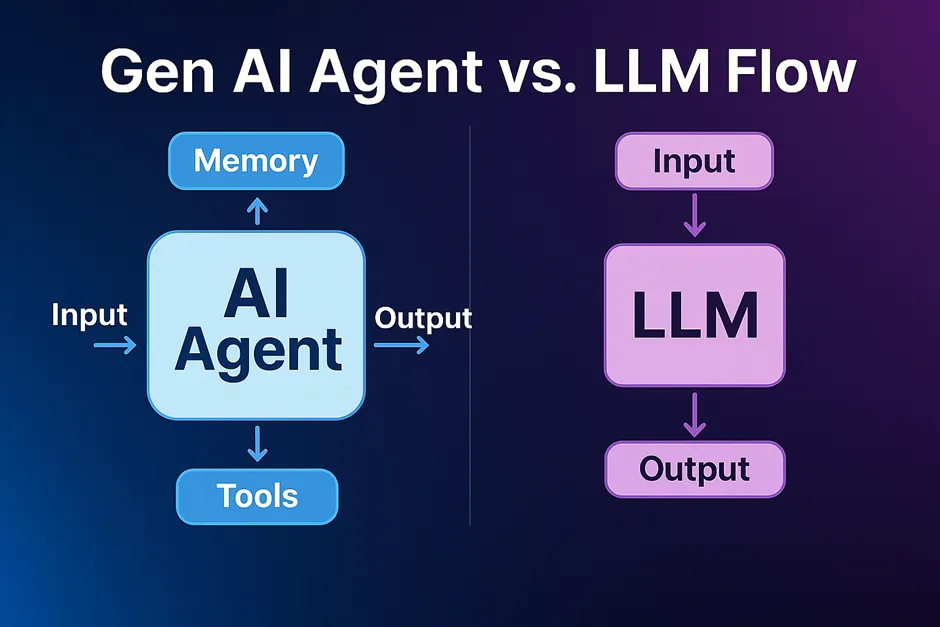
AI agents differ from simpler AI chatbots in their ability to make decisions and take actions beyond just responding to queries. While AI chatbots excel at conversation, AI agents can integrate with multiple systems, execute complex workflows, and agents operate across various channels. AI assistants represent a middle ground, offering helpful guidance but typically requiring more human direction than fully autonomous AI agents.
Explore how KingCaller.ai's voice technology demonstrates these components working together
Types of AI Agents and Real-World Applications
Not all AI agents are built the same way. Different architectures suit different purposes, and understanding these variations helps in selecting the right approach for specific business needs.
Types of AI Agents
Simple Reflex Agents: These agents respond to specific conditions with predetermined actions. They operate on straightforward if-then rules without maintaining memory of past interactions. While limited in scope, simple reflex agents work well for routine tasks with clear triggers and responses.
Model-Based Reflex Agents: These systems maintain an internal representation of their environment, allowing them to handle situations where not all relevant information is immediately visible. Model-based reflex agents track context across interactions and use this awareness to inform their responses.
Goal-Based Agents: Goal-based agents evaluate potential actions based on how well they advance toward defined objectives. Rather than following fixed rules, they assess different paths and select strategies most likely to achieve their targets. This flexibility allows agents to handle varied scenarios while staying aligned with overall goals.
Utility-Based Agents: The most sophisticated type, utility-based agents weigh multiple competing factors to optimize outcomes. They consider not just whether an action achieves a goal, but how well it does so relative to other options. This enables nuanced decision-making in complex situations with trade-offs.
Learning Agents: Learning agents continually improve their performance through experience. They combine any of the above approaches with machine learning capabilities that refine their behavior over time. These AI agents leverage historical data to become more effective as they process more interactions and outcomes.
Examples of AI Agents in Action
The practical applications demonstrate how AI agents can perform tasks across numerous business functions:
Customer Service Operations: AI agents can handle incoming inquiries through voice calls, chat interfaces, and email. They can understand customer questions, access relevant information from knowledge bases, provide accurate answers, and escalate complex issues to human agents when appropriate. Agentic AI chatbots go beyond simple scripted responses to engage in natural, context-aware conversations that agents can improve over time.
Sales and Lead Qualification: Intelligent agents identify promising leads by analyzing behavior patterns and engagement signals. AI agents can perform initial contact, ask qualifying questions, assess fit, and route high-quality prospects to sales teams. This automation ensures quick response times while allowing human salespeople to focus on closing deals.
Appointment Scheduling: Rather than forcing customers through complicated booking systems, AI agents can help by handling scheduling conversationally. They check availability, propose options, handle rescheduling requests, and send confirmations and reminders automatically.
Data Analysis and Reporting: AI agents can process large volumes of information to identify trends, generate insights, and produce reports. AI agents analyze key metrics, alert stakeholders to important changes, and answer questions about business performance without requiring manual data extraction.
AI Agent Use Cases Across Industries
Different sectors have found valuable cases for AI agents:
Healthcare: Medical practices use AI agents for patient scheduling, appointment reminders, prescription refill requests, and initial symptom triage. These AI systems reduce administrative burden while ensuring patients receive timely attention. Specialized AI agents can understand medical terminology and protocols.
Retail: E-commerce platforms deploy AI agents to provide personalized recommendations, answer customer questions about inventory and shipping, process returns, and recover abandoned shopping carts through targeted outreach. AI agents can also help optimize inventory management.
Finance: Financial institutions implement AI agents for fraud detection, automated trading based on predefined strategies, customer account inquiries, and loan application processing. The technology helps manage risk while improving service delivery. Although AI agents can handle routine transactions, they maintain security protocols throughout.
Business Operations: Companies across industries use AI agents to automate workflow approvals, manage inventory, coordinate logistics, and handle routine HR tasks like answering employee policy questions or processing time-off requests. Multiple AI agents can work together in coordinated systems.
The Benefits of Deploying AI Agents for Your Business
Organizations that deploy AI agents typically see improvements across multiple dimensions of their operations. The advantages extend beyond simple automation to fundamental enhancements in how work gets done. AI agents offer several compelling benefits.
Why Use AI Agents
Constant Availability: AI agents operate around the clock without breaks, holidays, or shifts. Customers receive immediate responses regardless of when they reach out. This 24/7 capability particularly benefits businesses serving multiple time zones or experiencing high volumes of after-hours inquiries.
Scalability: Adding capacity to handle increased demand happens instantly when you use AI agents. Whether facing seasonal spikes or rapid growth, these systems scale without the delays and costs of recruiting, hiring, and training additional staff. Multiple agents can work simultaneously, handling thousands of interactions in parallel.
Cost Efficiency: While deploying AI requires upfront investment, AI agents help reduce ongoing operational expenses significantly. The cost per interaction drops substantially compared to human-handled tasks. Organizations redirect human resources toward higher-value activities that require creativity, empathy, or complex problem-solving.
Enhanced Customer Experience: Response times shrink dramatically when AI agents process initial contact. Customers get immediate acknowledgment and often complete resolution without waiting in queues. Consistency improves as AI agents can provide uniform quality regardless of time or volume.
Continuous Improvement: AI agents generate detailed interaction data that reveals patterns and opportunities. Organizations gain insights into common customer needs, pain points in processes, and areas where additional training or resources would help. The AI agents use this data to refine their performance over time through generative AI and machine learning capabilities.
Error Reduction: Repetitive manual tasks are prone to human error, especially under time pressure or high volume. AI agents can perform tasks consistently according to their programming. They maintain accuracy in data entry, calculations, and procedure following.
Adoption of AI Agents: Current Trends
Businesses across sectors are accelerating their adoption of AI agents. Companies already deploying AI report significant returns on investment, with many seeing payback periods of less than a year. The competitive landscape increasingly favors organizations that can respond faster, operate more efficiently, and deliver superior customer experiences through agentic AI automation.
Market research indicates that the development and deployment of AI agent technology continues to mature rapidly. Organizations implementing AI agent systems experience measurable improvements in customer satisfaction scores, operational costs, and employee productivity. As the technology matures and implementation becomes more accessible, adoption rates continue climbing.
The advantages compound over time. Organizations that build AI agents now position themselves to iterate and improve, building institutional knowledge about what works in their specific context. This learning curve creates competitive advantages that late adopters struggle to match. AI agents could reshape entire industries as more sophisticated AI systems emerge.
Getting Started: How to Implement AI Agents in Your Organization
Moving from concept to operational AI agents requires thoughtful planning and execution. The process need not be overwhelming when approached systematically.
Steps to Deploy AI Agents
Identify Use Cases and Pain Points: Begin by examining where your organization faces repetitive tasks, capacity constraints, or customer service bottlenecks. Look for processes that follow relatively predictable patterns and involve clear decision criteria. These represent prime opportunities for AI agent implementation.
Choose the Right AI Agent System: Evaluate available platforms based on your specific requirements. Consider factors like the types of AI agents they support, integration capabilities with your existing technology stack, customization options, and the level of technical expertise required to deploy and maintain them.
Integration with Existing Tools: AI agents deliver maximum value when connected to your current systems. Plan how the agent will access customer data, update records, trigger workflows in other applications, and share information across platforms. Clean APIs and integration documentation simplify this process significantly.
Training and Optimization: Configure your AI agent system with relevant knowledge about your business, products, services, and processes. Define the scope of what the agents should handle autonomously versus when to escalate to humans. Test extensively with realistic scenarios before full deployment.
Monitor Performance and Iterate: Track key metrics like resolution rates, customer satisfaction, escalation frequency, and task completion times. Analyze interactions to identify where the AI agents perform well and where improvements are needed. Continuously refine the system based on these insights.
Get Started with AI Agents at KingCaller.ai
Implementing AI agents becomes more accessible with platforms designed for business users rather than requiring extensive technical expertise. Solutions that handle the underlying complexity while exposing intuitive configuration interfaces enable faster deployment and easier maintenance.
Modern AI agent platforms provide pre-built integrations with common business tools, reducing implementation time. They offer analytics dashboards that surface performance insights without requiring data science skills. Support resources help organizations optimize their deployment for specific use cases.
Conclusion
AI agents represent a fundamental shift in how businesses automate processes and interact with customers. These autonomous systems perceive their environment, make decisions based on available information, and take actions to achieve defined goals. The technology spans from simple reflex agents handling routine tasks to sophisticated learning agents that improve continuously through experience.
Organizations across industries are finding valuable applications for AI agents in customer service, sales, operations, and analytics. The benefits include constant availability, effortless scalability, reduced costs, improved customer experiences, and continuous performance enhancement.
Implementing AI agents has become increasingly accessible. Platforms now exist that simplify deployment, integration, and management without requiring deep technical expertise. As the technology continues evolving, the gap between early adopters and followers will likely widen, making now an opportune time to explore how AI agents can address specific business challenges.
The future will see AI agents handling increasingly complex tasks as the underlying AI models and architectures advance. Organizations that build experience with this technology position themselves to take advantage of these capabilities as they emerge.

Common FAQs
What distinguishes AI agents from AI chatbots?
AI chatbots primarily focus on conversational interactions, responding to user inputs with appropriate messages. AI agents have broader capabilities that include making decisions, taking actions across multiple systems, and operating autonomously to achieve specific goals. While a chatbot might answer questions, an agent can also schedule appointments, update records, trigger workflows, and coordinate with other systems without human intervention.
How do AI agents use learning to improve?
Learning agents incorporate machine learning models that analyze patterns in past interactions and outcomes. They identify which approaches work well in different situations and adjust their decision-making accordingly. Over time, this process of evaluation and refinement makes the agents more accurate in understanding requests, more effective in selecting appropriate responses, and better at achieving their objectives.
What are common use cases for AI agents in business?
Typical applications include automated customer service through voice and chat channels, lead qualification and sales support, appointment scheduling and calendar management, data analysis and reporting, workflow automation for routine processes, and personalized recommendations based on customer behavior patterns.
How difficult is it to deploy AI agents?
Implementation complexity varies based on the platform chosen and the sophistication of the desired functionality. Modern solutions offer no-code or low-code interfaces that enable business users to configure and deploy basic AI agents without programming skills. More complex use cases requiring extensive integrations or custom logic may need technical resources, but many platforms provide professional services to assist with deployment.
Can AI agents work with existing systems?
Most enterprise-grade AI agent platforms provide integration capabilities with common business applications through APIs, webhooks, and pre-built connectors. This allows agents to access customer data, update CRM records, trigger actions in marketing automation platforms, and coordinate with other tools in your technology stack. Integration requirements should be evaluated during the platform selection process to ensure compatibility with your specific systems.
Related Blogs












Be The Change In
Customer Engagement